-
What is ART-ECO?
ART-ECO is an Erasmus+ research project that sets out to rethink the role of arts education in relation to contemporary ecological and societal challenges, focusing on the way in which people relate to the world. Sustainability, inclusion and climate awareness are not seen as topics just to be added to existing curricula, but are conditions which call for a deeper transformation or rearticulation of educational practice itself. ART-ECO therefore approaches arts education as the way in which ways of being with, acting in, and responding to a shared world might be cultivated
ART-ECO seeks to develop a world-centered didactic framework which is not intended as a prescriptive step-by-step model, but which ‘functions’ as an open and reflective orientation that can help educators become more attentive to their everyday gestures, material choices, spatial arrangements and how modes of interaction enact a particular relationship to the world.
The project therefore seeks to deliberately ground itself in existing artistic-educational practices which act as sources of knowledge in their own right, but wishes to enrich these practices by confronting them with each other and with potentializing ideas and concepts.
Ultimately, the project will result – through a co-creative process – in 12 didactical packages which teachers can integrate into their art-educational practices which enact a worl-centered and sustainable relation to the world.
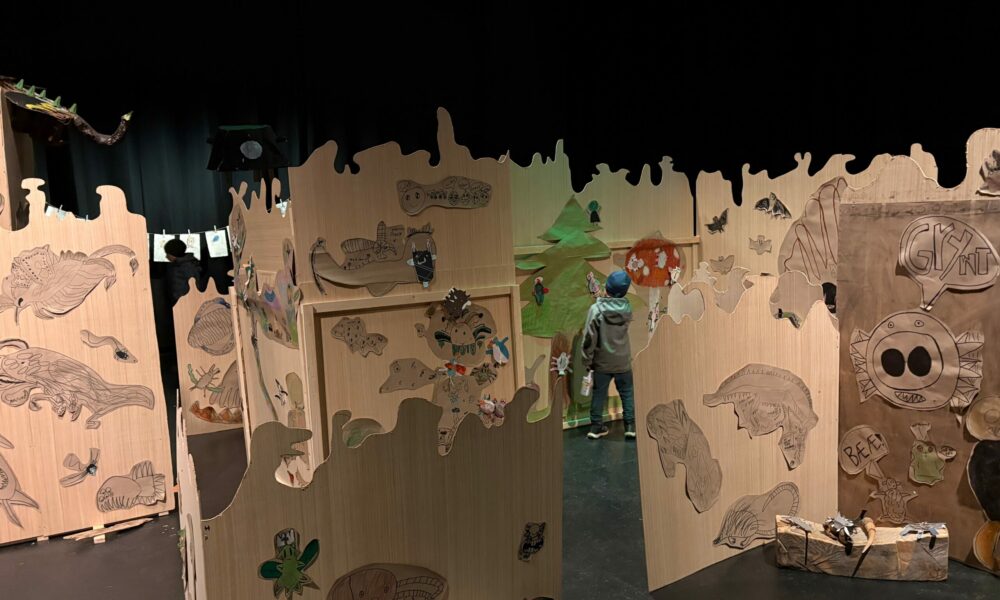
The A in the Jungle. Photopainting by ReMiDa
-
The ART-ECO Activities
Through processes of sourcing, weaving, and enacting, ART-ECO gathers concrete practices, reflects on their underlying orientations, and brings them into dialogue with contemporary educational and philosophical thinking. In this way, theory and practice are developed together, rather than sequentially. These three phases also correspond to activities organized by the team.
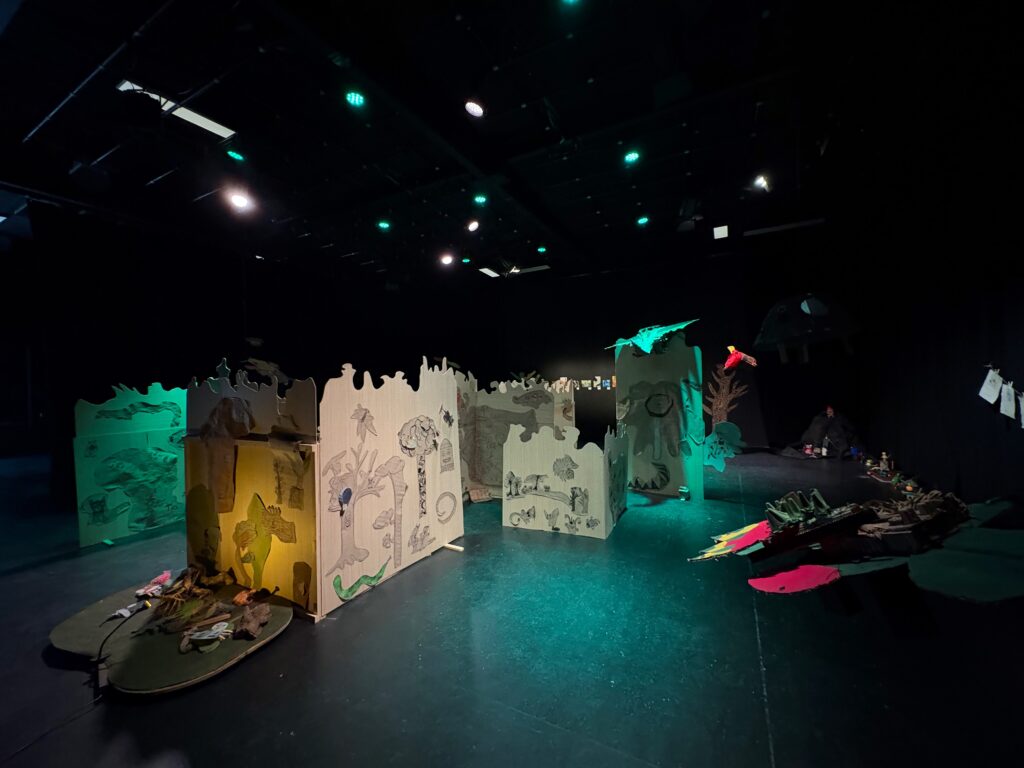
Sourcing thereby refers to the practice of encountering, attending to and gathering existing educational practices and concepts as sources of thinking. By listening to the respective arts-educational practices that are present in our network and treating them as sites where educational thinking is already happening, we try to ‘source’ their richness. For this phase, the team met up in Belgium and were hosted by researchers of the UCLL and the team of Kunstlicht. During their time spent together, participants shared experiences about their own activities and practices with each other.
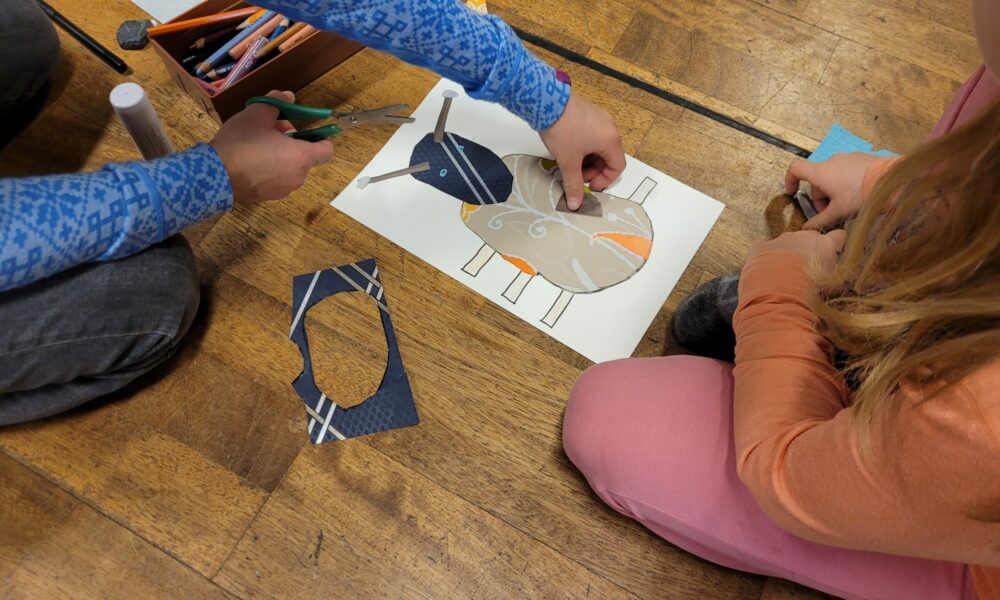
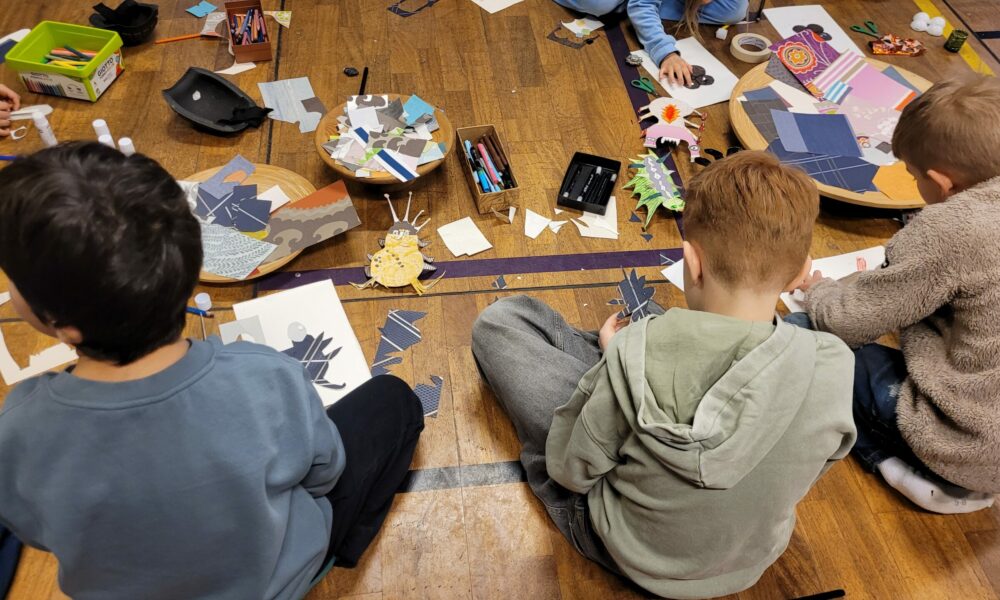
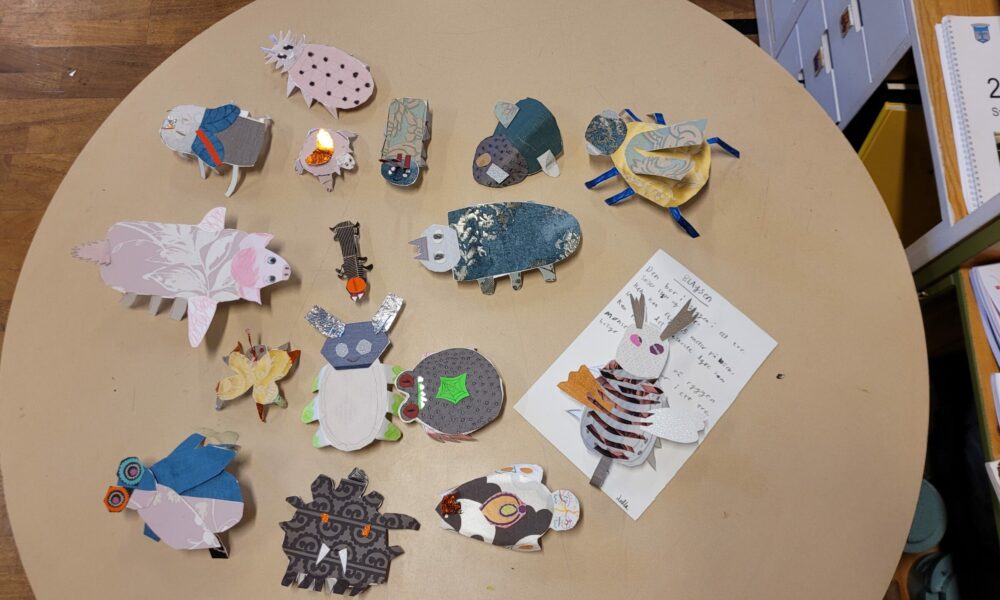
In the weaving phase, materials gathered through sourcing are brought into relation with one another in order to articulate what these practices reveal about arts education in relation to the world, from our more general world-centred perspective. If sourcing is primarily concerned with attentive encounter, weaving is more concerned with articulation. For this phase the researchers came together to organize a week-long series of workshop-experiments together with a local school in which new ideas were tried out in connection to the theoretical framework that had been developing.
Enacting refers to the phase in which the orientations and insights that emerge through sourcing and weaving are brought back into lived practice and explored in concrete educational situations. For this phase, researchers will meet up in Vienna in March 2027 in order to concretize how our insights can make shifts in everyday practices possible.
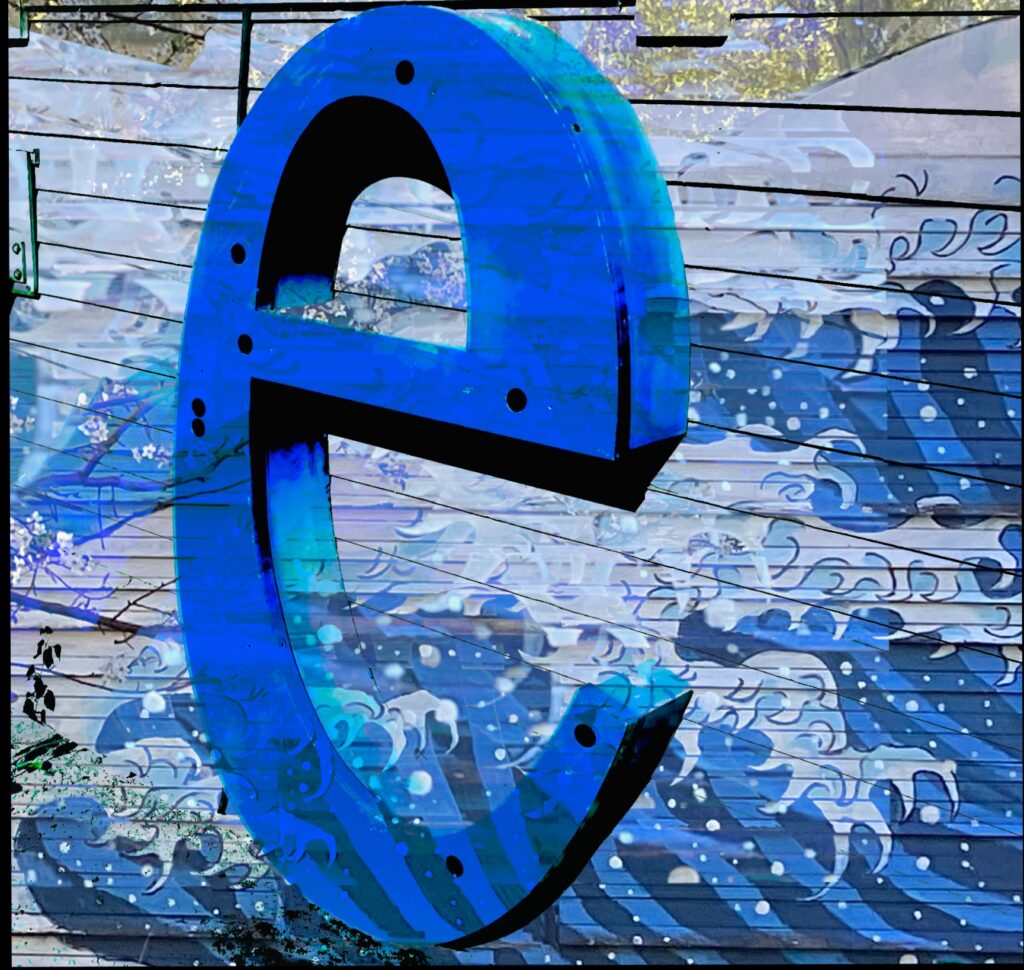
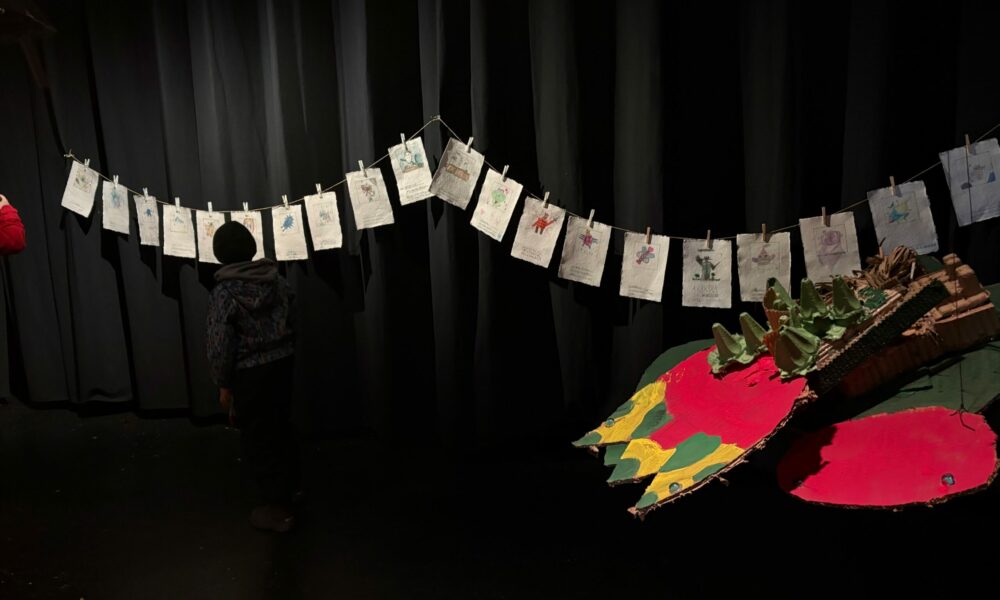
The E in the Ocean. Photopainting by ReMiDa